Table of Contents
Shopping for professional streaming equipment can feel overwhelming. You want the best quality for your investment, but with so many options available, how do you know which IPTV encoder over $2500 is right for you?
Quality matters when you’re broadcasting to a professional audience. A poor encoder can ruin your stream with lag, pixelation, and dropped connections. That’s why choosing the right equipment from the start saves you time, money, and headaches down the road.
In this guide, you’ll discover exactly what to look for when investing in an IPTV encoder over $2500. We’ll walk through the essential features, compare top models, and help you avoid common buying mistakes. By the end, you’ll know how to pick the perfect encoder for your streaming needs.
What Is an IPTV Encoder and Why Invest Over $2500?
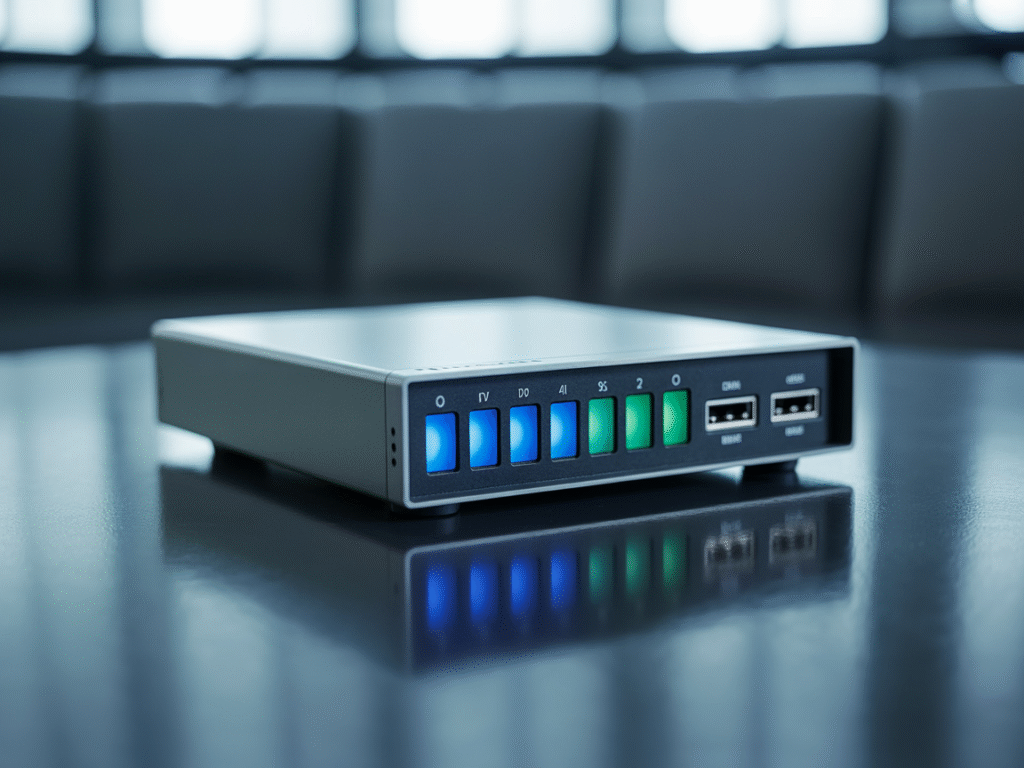
An IPTV encoder is a device that converts video signals into digital streams that can travel over the internet. Think of it as a translator that takes your camera feed or video source and turns it into something people can watch online. Without an encoder, you can’t broadcast live content to your viewers.
Budget encoders might cost a few hundred dollars, but they often struggle with quality and reliability. Premium models in the IPTV encoder over $2500 range offer professional-grade features that budget options simply can’t match. You get better video quality, more connection options, and equipment that can run 24/7 without breaking down.
Investing in an IPTV encoder over $2500 gives you several key advantages. First, you get superior video quality with support for 4K and high-definition streaming. Second, these encoders are built to last, with better cooling systems and tougher components. Third, they offer more flexibility with input and output options, making them work with almost any setup.
Who actually needs a professional encoder? Broadcasters who stream live events definitely do. Churches, schools, and businesses that regularly produce video content benefit hugely. Hotels, hospitals, and large venues that need reliable in-house streaming also rely on quality encoders. If your streaming is critical to your business or organization, investing in professional equipment makes perfect sense.
Essential Features to Look for in Premium IPTV Encoders
Video Quality and Resolution Support
The most important feature of any encoder is the quality of video it produces. When you’re looking at the best IPTV encoder over $2500, make sure it supports both 4K and HD encoding. Your viewers expect crystal-clear video, and future-proofing your investment means choosing equipment that handles higher resolutions.
Bitrate range matters more than most people realize. A good encoder should let you adjust bitrates from 1 Mbps up to 20 Mbps or higher. This flexibility means you can stream to viewers with different internet speeds without sacrificing quality for those with faster connections.
Codec support is another crucial element. Look for encoders that handle H.264, H.265, and HEVC compression. These standards help you deliver better quality at lower file sizes, which means smoother streaming and lower bandwidth costs. The more codecs your encoder supports, the more flexibility you have.
Input and Output Options
Connection options can make or break your streaming setup. An IPTV encoder over $2500 HDMI input is essential for most modern cameras and video sources. HDMI delivers excellent quality and works with the widest range of equipment.
But don’t stop at HDMI alone. Professional encoders should also offer SDI inputs, which are the standard in broadcast television. Some sources might need component or composite inputs too. The more input types your encoder accepts, the easier it is to work with different cameras and video sources.
Output flexibility matters just as much as input options. Your encoder should support multiple streaming protocols like RTMP for platforms like YouTube and Facebook, HLS for web browsers and mobile devices, and SRT for reliable streaming over unpredictable networks. Having all these options means you can stream anywhere your audience watches.
Reliability and Build Quality
Professional streaming doesn’t take breaks, and neither should your encoder. When evaluating an IPTV encoder over $2500, check that it’s built for continuous operation. Look for metal housings instead of plastic, which helps with heat dissipation and protects internal components.
Thermal management is critical for equipment running around the clock. Quality encoders have efficient cooling systems with quiet fans or passive cooling designs. Overheating is one of the top reasons encoders fail, so this feature directly impacts your equipment’s lifespan.
Don’t overlook warranty and support either. The best IPTV encoder over $2500 options come with at least a two-year warranty. Make sure the manufacturer offers responsive technical support, has good documentation, and provides firmware updates. You’re investing serious money, so the company behind your encoder should stand behind their product.
Scalability and Integration
Your streaming needs today might not match what you need tomorrow. A scalable encoder grows with your business. Look for models that can handle multiple channels simultaneously if you think you’ll expand your streaming in the future.
Network capabilities should match your ambitions. Professional encoders need gigabit ethernet ports at minimum, and some offer dual network interfaces for redundancy. If your internet goes down on one connection, the encoder automatically switches to the backup.
API access and third-party integration open up powerful possibilities. These features let you control your encoder remotely, integrate it with automation systems, and build custom workflows. Even if you don’t need these capabilities now, having them available means your IPTV encoder over $2500 investment stays relevant longer.
Top Brands and Models: Best IPTV Encoder Over $2500
Brand Comparison Overview
Several manufacturers dominate the premium encoder market, and understanding their strengths helps you choose wisely. Haivision is known for rock-solid reliability and excellent SRT streaming support. Their encoders power major sports broadcasts and news networks worldwide.
Teradek has built a strong reputation among videographers and event producers. Their encoders are user-friendly and offer excellent mobile streaming capabilities. Matrox focuses on multi-channel encoding and integration with professional broadcast systems.
When comparing the best IPTV encoder over $2500 brands, look at how long they’ve been in business and who uses their equipment. Companies with decades of experience typically offer better support and more reliable products. Check online reviews from actual users, not just marketing materials.
Customer support quality varies dramatically between manufacturers. The best companies offer phone support during business hours, detailed online documentation, and active user communities. Before you buy, test their support by calling with a pre-sale question. How they treat potential customers tells you how they’ll treat you after the sale.
Key Models to Consider
The Haivision Makito X4 Video Encoder stands out for its exceptional reliability and low-latency streaming. It supports 4K encoding, offers both HDMI and SDI inputs, and includes advanced features like closed captioning support. The pros include military-grade security, excellent image quality, and proven track record in demanding environments. The main con is the higher price point, often reaching the upper end of the IPTV encoder over $2500 range, and the interface can feel technical for beginners.
Teradek Prism Flex 4K delivers outstanding flexibility for live event streaming. It handles multiple destinations simultaneously, includes built-in cellular bonding, and offers an intuitive touchscreen interface. Pros include exceptional mobile streaming performance, easy setup, and great customer support. Cons include the requirement for paid cloud services for some features and higher heat generation during extended use.
The Matrox Monarch EDGE E4 excels at multi-format recording and streaming. It supports simultaneous recording to USB drives while streaming, offers dual HDMI inputs, and provides excellent value in the premium encoder category. Pros include straightforward setup, reliable performance, and competitive pricing for the features offered. The cons are limited to fewer advanced features compared to top-tier competitors and a basic web interface.
When comparing the best IPTV encoder over $2500 options, consider which features matter most for your specific needs. The Haivision is ideal for mission-critical applications where reliability trumps everything. The Teradek shines for mobile and event streaming where you need flexibility. The Matrox offers the best value if you need solid performance without the highest-end features.
How to Evaluate Your Specific Needs
Assess Your Streaming Requirements
Different content types demand different encoder capabilities. Live sports need low latency so viewers see plays in real-time. Corporate communications can tolerate slightly higher latency but need reliable quality for professional appearances. Educational content benefits from features like screen capture and presentation mode.
Think honestly about your viewer count and bandwidth requirements. Streaming to 50 people requires much less than broadcasting to 5,000 viewers. Your IPTV encoder over $2500 should handle your current audience with room to grow. If you expect rapid growth, choose an encoder that can scale with you.
Resolution and quality standards depend on your audience expectations and content type. A church streaming services might do fine with 720p HD, while a corporate product launch demands 4K. Match your encoder’s capabilities to what your viewers actually need, not what sounds impressive on paper.
Technical Infrastructure Considerations
Your network capacity directly impacts streaming success. Before investing in an IPTV encoder over $2500, test your internet upload speed. You need at least double the bitrate you plan to stream. If you’re streaming at 10 Mbps, you need a 20 Mbps upload connection for reliability.
Equipment compatibility saves you from expensive surprises. Make a list of all the cameras, video sources, and displays you’ll connect to your encoder. Verify that the models you’re considering have the right inputs and outputs. An IPTV encoder over $2500 HDMI connection is standard, but confirm your specific cameras work with the encoder’s specifications.
Server and CDN requirements often get overlooked until it’s too late. Some encoders work best with specific streaming platforms or content delivery networks. If you’re already committed to a particular platform, make sure your encoder choice integrates smoothly. The last thing you want is to discover your new encoder doesn’t play nice with your existing infrastructure.
Budget and ROI Analysis
The purchase price is just the beginning of your investment. Calculate the total cost of ownership including any required accessories, mounting hardware, and backup equipment. Some encoders need separate power supplies or special cables that add to your initial outlay.
The long-term value of an IPTV encoder over $2500 comes from years of reliable service. A quality encoder should last five years or more with proper care. Divide your total investment by the expected lifespan to understand your annual cost. Suddenly that premium encoder doesn’t seem so expensive when you realize it costs less than $600 per year.
Maintenance and operational costs include electricity, cooling, and occasional repairs. Professional encoders are generally efficient, but they do run continuously. Factor in replacement parts like fans, which might need changing every few years. Budget for firmware updates and potential service calls, though quality equipment rarely needs repairs.
Common Mistakes to Avoid When Buying
One of the biggest mistakes is overlooking input connectivity requirements. You might find a great deal on an encoder, only to discover it doesn’t have the IPTV encoder over $2500 HDMI input your camera requires. Always verify compatibility before you buy. Check every input and output against your actual equipment list.
Ignoring codec compatibility causes problems you won’t discover until you start streaming. Your encoder might produce beautiful video in H.265, but if your streaming platform or viewers’ devices don’t support that codec, you’re stuck. Research what codecs your audience can actually watch before choosing an encoder.
Underestimating bandwidth needs leads to buffering and unhappy viewers. Many people calculate bandwidth for perfect conditions, but internet connections fluctuate. Build in a safety margin of at least 30% above your theoretical requirements. If your stream needs 8 Mbps, make sure you have at least 11 Mbps available.
Choosing based solely on price is tempting, especially when you see similar features at different price points. But the best IPTV encoder over $2500 isn’t necessarily the cheapest one in that category. Build quality, reliability, and support justify price differences. A unit that costs $2,800 but lasts twice as long as a $2,500 model is actually the better value.
Neglecting customer support and warranty terms seems minor until something goes wrong. You need help, and suddenly you discover support is only available via email with 48-hour response times. Or you learn the warranty doesn’t cover certain failures. Read the fine print and understand exactly what protection you’re getting with your purchase.
Installation and Setup Best Practices
Start with a pre-installation checklist to avoid problems later. Verify your network speed and stability at different times of day. Confirm all cables are the right length and type. Test your power supply and make sure you have surge protection. Having everything ready before you unbox your IPTV encoder over $2500 makes installation smooth and stress-free.
Network configuration can be tricky, but following a few simple rules helps. Assign your encoder a static IP address so you can always find it on your network. Enable quality of service settings on your router to prioritize streaming traffic. If possible, put your encoder on a dedicated network separate from regular office traffic.
Testing and quality assurance should happen before you go live with important content. Stream to a private test channel and watch it on different devices. Check the quality on phones, tablets, computers, and smart TVs. Look for issues like audio sync problems, color accuracy, and buffering. Fix any problems during testing rather than discovering them during your big event.
Optimization for best performance involves fine-tuning several settings. Start with your encoder manufacturer’s recommended settings, then adjust based on your specific situation. Monitor CPU usage and temperature during long streams. If you see consistent problems, dial back your bitrate or resolution slightly. The best IPTV encoder over $2500 should handle your needs comfortably without maxing out resources.
Frequently Asked Questions
What’s the difference between hardware and software encoders?
Hardware encoders are dedicated devices built specifically for encoding video. They’re more reliable, produce consistent quality, and don’t slow down from other programs running. Software encoders run on computers and are more flexible but can struggle with demanding streams. For professional applications, hardware encoders in the IPTV encoder over $2500 range deliver better results.
Do I need an IPTV encoder over $2500 HDMI for my setup?
If your cameras and video sources use HDMI outputs, then yes, you absolutely need an IPTV encoder over $2500 HDMI input capability. HDMI is the most common connection for modern cameras, computers, and other video equipment. Most professional encoders include both HDMI and SDI inputs for maximum compatibility.
How long do professional encoders typically last?
Quality encoders in the IPTV encoder over $2500 range typically last five to seven years with proper care. Some units continue working reliably for a decade or more. The main factors affecting lifespan are operating temperature, humidity, and how many hours per day they run. Keeping your encoder cool and clean extends its working life significantly.
Can I upgrade my encoder later?
Most professional encoders receive firmware updates that add features and improve performance. These upgrades are usually free from the manufacturer. However, you can’t upgrade hardware components like adding more inputs. When choosing your IPTV encoder over $2500, pick one with all the physical connections you might need in the future.
What bitrate should I use for streaming?
Bitrate depends on your resolution and content type. For 720p HD, use 3-5 Mbps. For 1080p Full HD, aim for 5-8 Mbps. For 4K content, you’ll need 15-25 Mbps. Fast-moving content like sports needs higher bitrates than static content like presentations. Start with these ranges and adjust based on your results and available bandwidth.
Conclusion
Choosing the right encoder comes down to matching features to your specific needs. You’ve learned that an IPTV encoder over $2500 offers professional quality, reliability, and features that budget models simply can’t provide. The key decision factors include video quality support, input and output options, build quality, and scalability for future growth.
Don’t rush this important decision. The best IPTV encoder over $2500 for someone else might not be the best for you. Consider your content type, audience size, technical infrastructure, and budget carefully. A church needs different features than a sports broadcaster, and a corporate communications team has different priorities than an event production company.
Remember that you’re not just buying a box that encodes video. You’re investing in the foundation of your streaming operation. The right IPTV encoder over $2500 delivers years of reliable service, grows with your needs, and represents your brand with professional-quality streams.
Ready to take the next step? Start by researching the specific models mentioned in this guide. Compare their specifications against your requirements checklist. Request demos from manufacturers if possible, or watch comparison videos from actual users. Don’t hesitate to contact vendors with questions about how their encoders handle your specific use case.
Your perfect encoder is out there. With the knowledge you’ve gained from this guide, you’re ready to make an informed decision that serves your streaming needs for years to come. Take your time, do your research, and invest in quality equipment that won’t let you down when it matters most.